Program 02
Advocacy, Awareness and Education
Workshops, talks and training that name abuse accurately, teach people what coercive control looks like, and equip communities to respond well the first time.
Abuse survives on two things: silence and bad information. A community that cannot recognise coercive control will keep telling a woman she is lucky he does not hit her. A church that treats the marriage as the thing to be saved will keep sending people home. A workplace that has no policy will keep losing staff without ever knowing why.
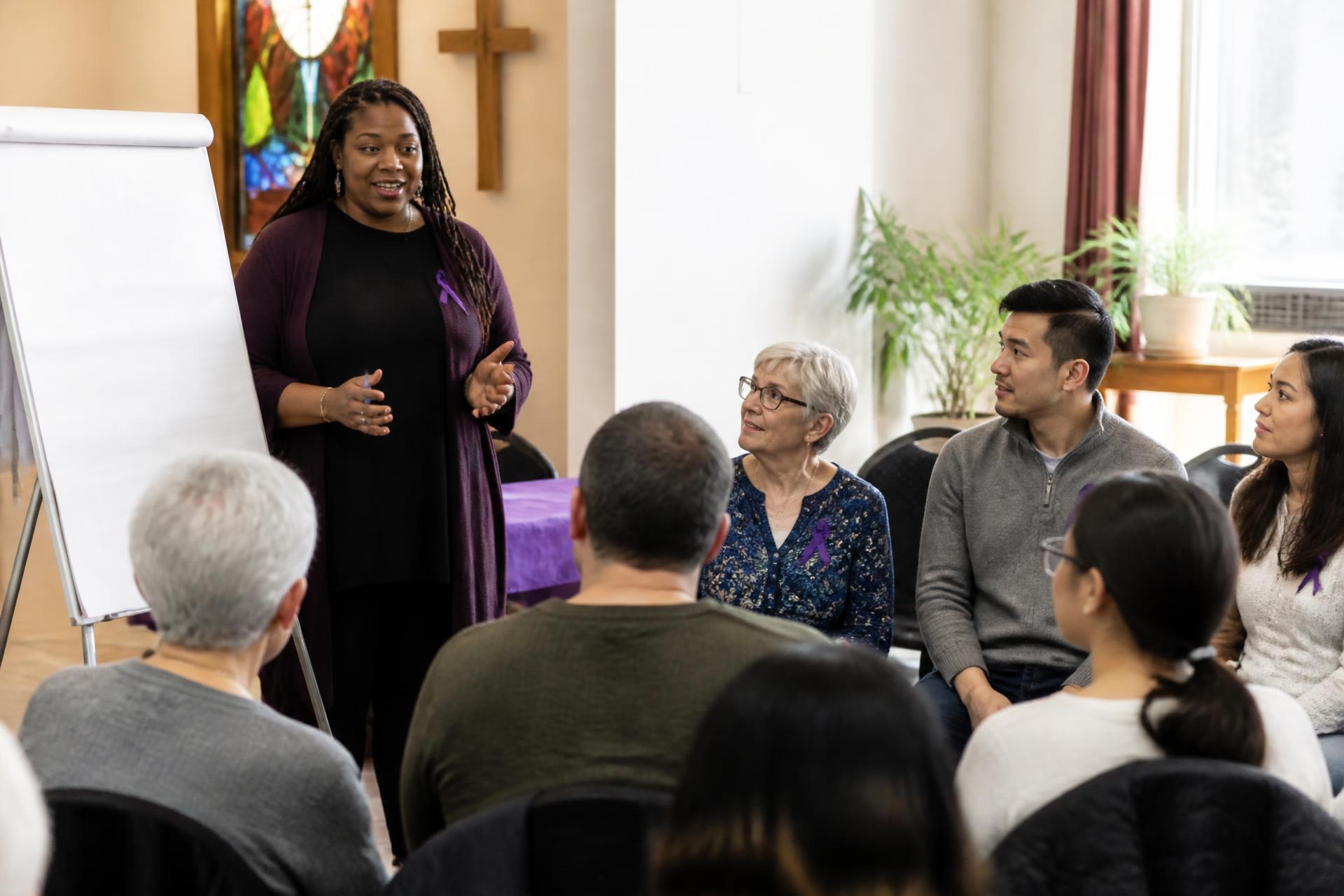
Our education work exists to close that gap. We run sessions for congregations, community groups, employers, student bodies and diaspora associations. They are practical rather than academic. We cover what abuse actually looks like day to day, why people stay, what the danger points are, and above all what to say in the ninety seconds after someone tells you something difficult.
That last part is the heart of it. Most people who disclose abuse do so once, to a friend, and what happens next decides whether they ever try again. Teaching one room of people how to receive a disclosure well does more good than any poster campaign we could afford.
We also speak publicly. Anopa takes invitations to pulpits, panels, radio programmes and community halls in Texas and across Southern Africa. The tone is the same in every one of them: no lecturing, no shaming, no statistics without a person attached.
Awareness on its own changes nothing. Awareness attached to a phone number, a named contact and a policy changes a great deal. Every session we run ends with all three.