
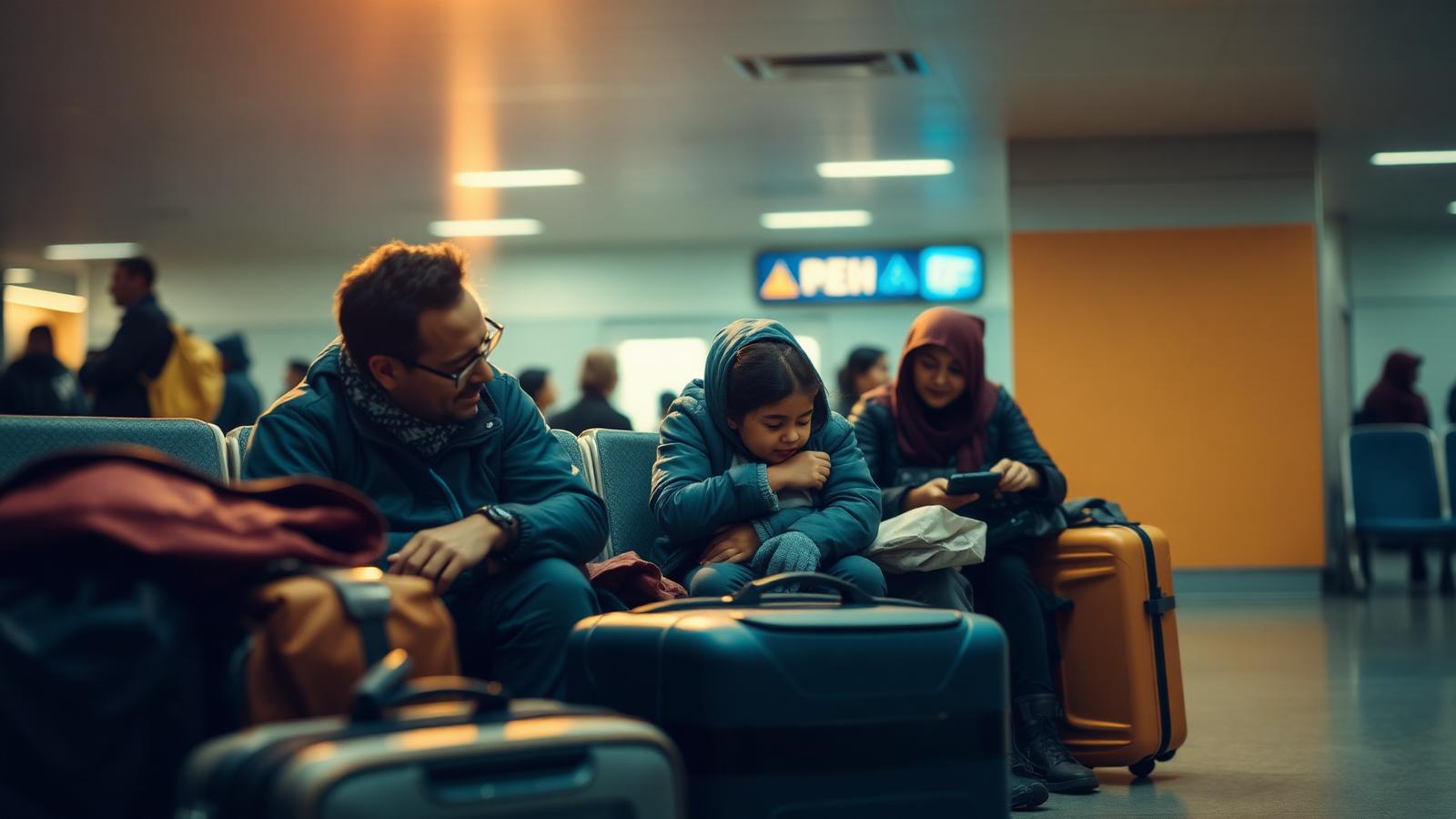
Threats to report or deport
Threatening to call immigration authorities, tell an employer, or report a person to police if they do not comply. This threat is often used to stop someone from reporting abuse or leaving.
National Immigration Law CenterIn danger now? Call 911. Confidential 24 hour support: 1-800-799-7233
A form of abuse
Immigration and status abuse is the use of a person's immigration status, visa, or fear of deportation to control, exploit, or harm them. It includes threats to report to immigration authorities, withholding or destroying documents, preventing a person from applying for legal status, and using dependency on a sponsor or spouse as leverage. It is a common form of power and control in abusive relationships.
Why this matters
Immigration status is one of the most powerful tools an abuser can hold. A person who depends on a spouse for a visa, who does not have work authorisation, who fears deportation, or who is undocumented may feel they cannot call the police, leave the relationship, or seek help without losing everything.
The abuser does not need to be a citizen or legal resident to use this power. They may threaten to call immigration, claim they will have the person deported, or say that no one will believe an immigrant. These threats are effective even when they are not legally accurate.
U.S. law includes protections for survivors, including VAWA self-petitions, U visas for victims of certain crimes, and T visas for trafficking survivors. These protections exist because lawmakers recognised that abusers exploit immigration status. The challenge is that many survivors do not know about them.
The definition
Threatening to call immigration authorities, tell an employer, or report a person to police if they do not comply. This threat is often used to stop someone from reporting abuse or leaving.
National Immigration Law CenterWithholding, hiding, or destroying passports, visas, birth certificates, work permits, or other identity documents. Without documents, the person cannot travel, work, or prove their status.
U.S. Citizenship and Immigration ServicesA person on a family-based visa may depend on their spouse or parent for legal status. The abuser uses that dependency to control behaviour, finances, and decisions.
National Immigration Law CenterPreventing the person from learning English, working legally, or contacting their home country's embassy or community. Isolation makes it harder to seek help.
U.S. Citizenship and Immigration ServicesHow it works
The threat does not have to be carried out. The fear of deportation is enough to keep a person compliant, silent, and isolated.
National Immigration Law CenterAn abuser may promise marriage, a visa, or a green card to keep the person in the relationship, then delay, refuse, or file documents in ways that create dependency.
U.S. Citizenship and Immigration ServicesThreats that the children will be taken, deported, or placed in foster care if the person reports abuse or leaves the relationship.
DOJ, Office on Violence Against WomenForcing the person to work without pay, underpaying them, or threatening to report their employment status if they speak up.
National Immigration Law CenterHow to identify it
One of these on its own may mean nothing. Several of them together, repeated over time, is a pattern, and a pattern is what abuse looks like from the inside.
Who it happens to
Abuse does not respect age, gender, income, faith, or country. These are the people most often affected by this particular form.
Immigrants, refugees, and asylum seekers of any immigration status, including undocumented people, visa holders, and permanent residents.
Survivors of domestic violence, sexual assault, trafficking, and other crimes who fear deportation if they report.
People on family-based visas who depend on an abusive spouse or parent for legal status.
Migrant workers, domestic workers, and people in industries with little oversight or protection.
What it costs
Fear of deportation, loss of status, and family separation keeps many survivors in abusive relationships far longer than they would otherwise stay.
DOJ, Office on Violence Against WomenImmigrants are less likely to report abuse, assault, or trafficking because they fear interaction with police or government agencies.
National Immigration Law CenterSurvivors may avoid medical care, police, and social services, even in emergencies. This can worsen injuries, mental health, and pregnancy outcomes.
World Health Organization, Violence against womenWithout work authorisation or control of documents, survivors may be forced into unpaid labour, underpaid work, or dependence on the abuser for survival.
U.S. Citizenship and Immigration ServicesHow to deal with it
If you are in immediate danger, call 911. You can often report a crime without being asked about your immigration status, though practices vary by locality.
Contact an immigration attorney or a legal aid organisation that helps survivors. Many offer free or low-cost services. Do not make legal decisions based only on what the abuser tells you.
Learn about VAWA self-petitions, U visas, and T visas. These are U.S. protections designed specifically for survivors of abuse and certain crimes.
Keep copies of important documents in a safe place if you can. Include your passport, visa, identification, court records, and any evidence of abuse.
Call the National Domestic Violence Hotline at 1-800-799-7233. They can connect you with culturally competent and immigration-aware services.
You do not have to be a citizen to be safe. Help is available regardless of your status.
Do not ask about immigration status unless it is relevant to providing help. Survivors often fear that any service will report them.
Connect them with a qualified immigration attorney or legal aid organisation. Immigration law is complex, and wrong advice can be dangerous.
Reassure them about confidentiality. Many service providers, including domestic violence hotlines, do not report immigration status to authorities.
Help them understand their rights. VAWA, U visas, and T visas exist precisely because survivors need protection from status-based abuse.
Offer practical help: safe housing, a phone, transport, translation, and accompaniment to appointments. These supports can be as important as legal advice.
Where to get help
If you are in immediate danger, call your local emergency number first. Everything below is confidential and none of it requires you to make a decision today.
uscis.gov/humanitarian/victims-of-crime
Official information on VAWA self-petitions, U visas for crime victims, and T visas for trafficking survivors.
nilc.org · immigrant rights and resources
Legal information and advocacy for low-income immigrants, including survivors of domestic violence.
justice.gov/ovw · immigration protections
Information on legal protections for immigrant survivors of domestic violence, sexual assault, and trafficking.
1-800-799-7233 · text START to 88788
Confidential domestic violence support, with referrals to culturally competent and immigration-aware services.
Questions
In many cases, no. U.S. law has protections such as VAWA self-petitions, U visas, and T visas for survivors of abuse and certain crimes. You should speak with a qualified immigration attorney before assuming the worst.
The Violence Against Women Act allows certain abused spouses, children, and parents of U.S. citizens or permanent residents to petition for legal status without the abuser's cooperation or knowledge.
A U visa is for victims of certain crimes, including domestic violence, who have suffered substantial harm and are helpful to law enforcement. It can lead to legal status and work authorisation.
Yes. Domestic violence hotlines, shelters, and many legal aid organisations do not require legal status and do not report to immigration authorities. Help is available.
Your immigration status does not make you property. Threats of deportation are a control tactic, and U.S. law has created protections because those threats are recognised as abuse. You can get help safely.
501(c)(3) tax exempt. Your gift is tax deductible.