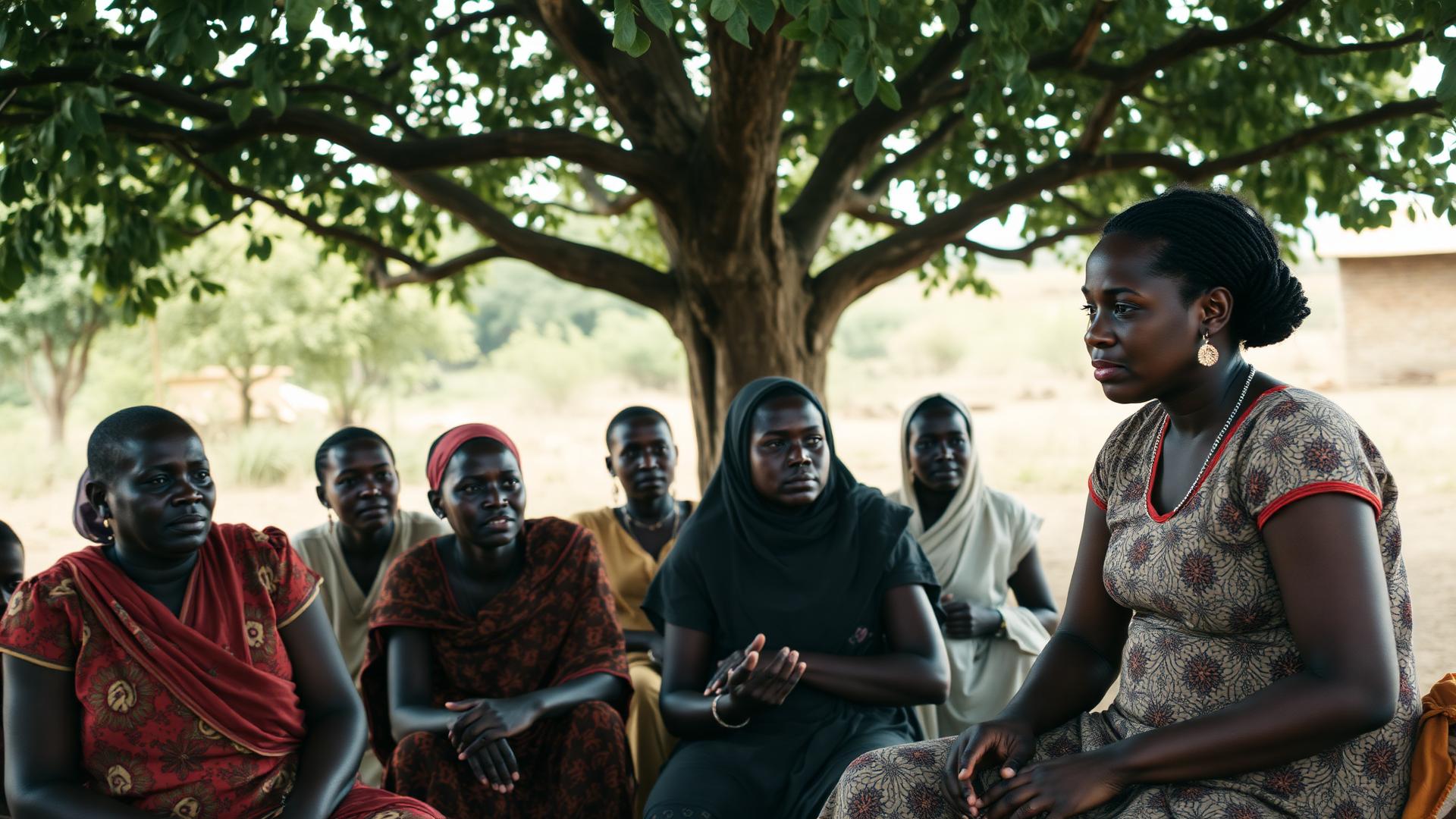
Female genital mutilation is the partial or total removal of the external female genitalia, or other injury to the female genital organs, for non medical reasons. It is carried out on infants, girls and young women, almost always without consent, almost always by someone the girl trusts. It has no health benefit of any kind. We treat it as what it is: a form of abuse, and one that sits squarely inside the work of this foundation.
The scale
How many, and where
230 million
Girls and women alive today have undergone female genital mutilation, across roughly 30 countries in Africa, the Middle East and Asia, plus diaspora communities everywhere else.
Cases, around 52 million girls and women, were cut by a health worker rather than a traditional practitioner. Medicalisation does not make the practice safe and WHO explicitly opposes it.
Women and girls in the United States were estimated to have been subjected to FGM or to be at risk of it, three times the 1990 estimate, driven mainly by migration from practising countries.
The annual global cost of treating the health complications of FGM, modelled by WHO across 27 high prevalence countries. Money spent on harm that was entirely avoidable.
The deadline the world set itself under Sustainable Development Goal target 5.3 to eliminate FGM. On current progress the world will miss it, which is why community level work still matters.
The same UNICEF survey data as the table below, drawn on a map so the geography is obvious. Every country card carries the figure, the documented spread inside its borders, and a link to the source.
No reported data
Documented, count based
Under 25%
25% to 49%
50% to 79%
80% and above
How to read this
Hover, tap or tab onto a shaded country to see its latest reported prevalence, the spread inside its borders and the source behind the figure.
All countries (34)
Select a region to zoom the map, then choose a country to read its latest reported prevalence, the spread inside its borders, and the source the figure comes from. Countries shown in grey either have no reported practice or no data collected, and an absence of data is never proof that no girl is at risk.
Where it happens
Country by country prevalence
Figures below are the share of women and girls aged 15 to 49 who have been cut, taken from each country's own Demographic and Health Survey or Multiple Indicator Cluster Survey and compiled by UNICEF. They are self reported, so in countries where the practice is criminalised the true figure is likely to sit a little higher than the survey shows. Prevalence also varies enormously inside a single country: a national average of fifteen per cent can hide districts where nearly every girl is cut.
East and Horn of Africa
The highest concentrations anywhere in the world, and the region where Type III infibulation, the most severe form, is most common.
Country
Prevalence
Notes
Somalia
99%
Near universal, and predominantly Type III.
Djibouti
90%
Infibulation widespread despite a long standing ban.
Eritrea
83%
Banned since 2007; prevalence falling among younger girls.
Ethiopia
65%
Wide regional spread, from under 25% in some regions to over 95% in Somali region.
Kenya
15%
National average masks over 90% among Somali and Samburu communities.
Tanzania
10%
Concentrated in Manyara, Dodoma and Arusha regions.
Uganda
Under 1%
Confined mainly to the Sabiny and Pokot communities in the east.
Migration has carried the practice into countries that assume it does not happen there. It does, and vacation cutting, sending a girl abroad during school holidays, is the usual route.
Country
Prevalence
Notes
United States
513,000
Women and girls affected or at risk, three times the 1990 estimate, per CDC linked analysis.
European Union
About 600,000
Survivors living in the EU, with roughly 190,000 girls at risk across 17 member states.
United Kingdom
About 137,000
Women and girls affected, based on 2011 census linked estimates.
Australia, Canada, New Zealand
Documented
All three have criminalised the practice, including taking a child abroad to be cut.
This section is clinical on purpose. Vague language has protected the practice for a long time, and families are rarely told what the different procedures involve.
Type I, clitoridectomy
Partial or total removal of the clitoral glans, and in some cases the prepuce or clitoral hood that surrounds it.
Type II, excision
Partial or total removal of the clitoral glans and the labia minora, with or without removal of the labia majora.
Type III, infibulation
Narrowing of the vaginal opening by cutting and repositioning the labia to create a covering seal, often with the clitoral glans removed. The seal is later cut open for intercourse and again for childbirth, sometimes repeatedly.
Type IV, all other procedures
Every other harmful procedure to the female genitalia for non medical purposes, including pricking, piercing, incising, scraping and cauterising.
Severe pain, often without anaesthetic. Heavy bleeding that can become haemorrhagic shock. Swelling, inability to pass urine, wound infection, tetanus, sepsis. Injury to the surrounding tissue including the urethra and bowel. Girls have died of blood loss and of infection following the procedure.
Instruments are frequently reused between girls at the same ceremony, which raises the risk of blood borne infection alongside the immediate bacterial risk. This is one reason WHO refuses to accept medicalisation as a compromise: the harm is the cutting itself, not only the setting.
Recurrent urinary tract infections, painful urination, retention, and with Type III the slow and painful passing of menstrual blood through a narrowed opening. Many women live with these symptoms for decades and are never asked about the cause.
Keloid scarring, epidermoid cysts and abscesses are common. Women with Type III often need deinfibulation, a surgical opening, before intercourse or delivery, and in some communities are reinfibulated afterwards, which repeats the injury.
The WHO study group followed more than 28,000 women at 28 obstetric centres in Burkina Faso, Ghana, Kenya, Nigeria, Senegal and Sudan. Women with FGM had significantly higher rates of caesarean section, postpartum haemorrhage, extended hospital stay, infant resuscitation and inpatient perinatal death, and the risk rose with the severity of the cutting.
Systematic review evidence links FGM with reduced sexual desire and satisfaction, pain during intercourse and reduced lubrication. Partners are affected too, and couples frequently carry this without ever raising it with a clinician.
Chronic pelvic infection following cutting is associated with secondary infertility, and prolonged obstructed labour in women with severe cutting contributes to obstetric fistula, an injury that leaves a woman incontinent and, very often, socially isolated.
In a controlled study of Senegalese women published in the American Journal of Psychiatry, around 80 per cent of women who had been cut met criteria for an affective or anxiety disorder, and roughly 30 per cent met full criteria for post traumatic stress disorder, rates comparable with survivors of childhood abuse in other settings.
Intrusive memories of the day, flinching from medical examination, avoidance of smear tests and antenatal care, panic in the delivery room, nightmares, and a sense of betrayal that is heavier because the adults who arranged the cutting were the girl's own family. Many women describe a period of years before they learned that what happened to them had a name.
FGM rarely stands alone. It sits alongside child marriage, controlled movement, restricted education and, later, intimate partner violence, because all of them come from the same idea that a woman's body belongs to somebody else. A survivor who reaches us about one of those things frequently turns out to be carrying all of them.
The reasons people give, and what the evidence says
These are the arguments families actually hear, usually from someone they love and respect. Answering them gently and accurately is most of the work.
Myth
“It is a religious requirement.”
Fact
No religious text requires it. It is not in the Quran, it is not in the Bible, and it predates both by centuries; Herodotus described it in Egypt in the fifth century before Christ. It is practised by Muslims, Christians, Jews and followers of traditional religions in some countries, and not at all by the same faiths in others. Senior Islamic scholars, including at Al Azhar, and Christian leaders across Africa have publicly declared that faith does not demand it.
The reverse is true. Removing tissue and narrowing the opening traps urine and menstrual blood, which is why recurrent urinary tract infections, bacterial vaginosis and chronic pelvic infection are all more common in women who have been cut. There is no hygienic benefit of any kind.
“It helps with fertility and makes childbirth safer.”
Fact
The largest study ever done on this, more than 28,000 women across six African countries, found the opposite: higher rates of caesarean section, postpartum haemorrhage, infant resuscitation and newborn death, rising with the severity of the cutting. Chronic infection following cutting is also associated with secondary infertility.
“It stops promiscuity and keeps a marriage faithful.”
Fact
There is no evidence that cutting changes anybody's behaviour. What the research does show is pain during intercourse, reduced desire and reduced satisfaction, which damages marriages rather than protecting them. Fidelity is a matter of character and relationship, not anatomy.
WHO opposes medicalisation outright. A trained hand reduces neither the loss of healthy tissue nor the lifelong urinary, obstetric, sexual and psychological consequences, and a clinician performing it lends the practice a legitimacy that makes it harder to end. Around one in four cases, some 52 million, are now done by health personnel.
“It is only a small symbolic nick, so it does no harm.”
Fact
Type IV includes pricking, piercing, incising and scraping, all of them recognised as mutilation because they injure healthy genital tissue for no medical reason and are performed on a child who cannot consent. Studies in countries where cutting is described as symbolic have repeatedly found that more tissue is removed than the family was told.
It is documented in Asia, the Middle East, South America and throughout the diaspora in North America, Europe and Australasia. In the United States alone an estimated 513,000 women and girls are affected or at risk, and taking a girl abroad to be cut during the school holidays is a federal crime precisely because it happens.
“It is our culture, and outsiders have no right to speak.”
Fact
The people leading the campaign against it are overwhelmingly not outsiders. They are cut women, local midwives, imams, pastors, chiefs and the daughters of cutters, working in their own languages inside their own communities. Culture is made by people and can be remade by them; every society that has abandoned the practice has done so on its own terms.
This is the real engine of the practice: parents cut a daughter because they believe nobody will marry her otherwise. It is also the reason collective public declarations work. When enough families in a marriage network abandon it together, the marriage penalty disappears overnight, because there is no longer anyone left to enforce it.
A great deal can be done. Deinfibulation reopens a narrowed opening and relieves urinary and menstrual pain, clitoral reconstruction is available in a number of countries, pelvic physiotherapy and pain management help, and trauma focused therapy has good evidence behind it for the psychological injury. Symptoms that have been carried for twenty years are still treatable.
Prevalence has fallen sharply among younger girls in Burkina Faso, Kenya, Egypt, Ethiopia and Liberia. None of that happened by accident, and none of it happened through condemnation alone.
Whole community abandonment, not household by household
Cutting persists as a social convention: no single family can stop safely on its own without their daughters paying the price in the marriage market. The approach with the strongest record is collective, where an entire intermarrying network discusses it together over months and then declares abandonment publicly. Thousands of communities in Senegal, Guinea and Mali have made these declarations through the Tostan community empowerment programme and its successors.
Where the cutting is wrapped inside a coming of age ceremony, the answer is to keep the ceremony and remove the blade. Alternative rites in Kenya and Tanzania run the seclusion, the teaching, the blessing and the celebration, complete with certificates and family feasting, and simply omit the cutting. Girls still get the status the community expects them to have.
Because the strongest myth is a religious one, the most powerful counter is a respected imam or pastor stating publicly that faith does not require this. Declarations from Al Azhar in Egypt, from Islamic scholars in Mauritania and from church councils across East Africa have shifted opinion faster than any leaflet, and faith communities are exactly where our own foundation has standing.
Fathers and prospective husbands are usually assumed to demand cutting, and surveys repeatedly find that many of them do not, and that both sides believe the other insists on it. Simply publishing what men actually think, and having young men state that they will marry an uncut woman, dismantles the assumption that keeps it going.
Education is the most consistent protective factor in the data. Daughters of mothers with secondary education are markedly less likely to be cut, and girls who know the law and the health consequences resist, delay and report. School holidays are also the risk window, which makes teachers the single most useful early warning system there is.
In Egypt, Sudan, Kenya and Indonesia, the practice has been drifting from the cutter to the clinic. WHO's global strategy asks governments and professional bodies to prohibit it in clinical settings, strike off practitioners, and train health workers to counsel families instead. Where medical associations enforced it, the trend reversed.
Legislation on its own drives the practice underground and to younger ages. Legislation combined with community dialogue works, because families need to be able to tell relatives that they had no choice. Kenya's 2011 Act with its dedicated prosecution unit, Burkina Faso's enforcement record and the Gambian parliament's rejection of repeal in 2024 all show law and community persuasion reinforcing one another.
For many circumcisers this is income and standing, not cruelty. Programmes that retrain cutters as birth attendants, soap makers or traders, and hold a public ceremony where they hand over their tools, remove the economic reason to keep going and turn a defender of the practice into its most credible opponent.
Abandonment work fails when it shames the generation who were cut. Every credible programme pairs prevention with treatment: deinfibulation, pain and pelvic care, antenatal planning, counselling and peer groups. It also gives survivors the standing to lead, which is what changes minds in a village faster than any visitor can.
The reason we can say the practice is falling among younger girls in Burkina Faso, Kenya, Egypt and Ethiopia is that somebody measured it in the same way twice. Household surveys, district level data and honest reporting of what did not work are what let programmes stop wasting money and let communities see their own progress.
Performing FGM on a person under 18 is a federal crime under 18 U.S.C. 116. The STOP FGM Act of 2020 strengthened the statute after a court struck down the earlier version on constitutional grounds, raised the maximum sentence to ten years, and made it explicit that vacation cutting, taking a girl out of the country to be cut, is also an offence.
Around 40 states also have their own FGM statutes, and in every state a child at risk of being cut is a mandatory reporting matter for teachers, clinicians and clergy. If you believe a girl is about to be taken abroad to be cut, that is an emergency, not a family matter to be handled quietly.
FGM is recognised as a violation of the human rights of girls and women by WHO, UNICEF, UNFPA and the UN General Assembly, which passed its first resolution calling for the elimination of the practice in 2012. The sixth of February is the International Day of Zero Tolerance for FGM.
The Prohibition of Female Genital Mutilation Act 2011 criminalises performing, procuring, aiding and failing to report the practice, and taking a girl abroad to be cut. Kenya runs a dedicated anti FGM prosecution unit and a national board.
Egypt
Banned in 2008 and toughened in 2016 and 2021; performing it now carries heavy prison terms, with harsher sentences for medical professionals, who may also be struck off.
Sudan
Criminalised in 2020 with up to three years imprisonment, a landmark in a country where prevalence sits near 87 per cent.
The Gambia
Banned since 2015. In July 2024 parliament decisively rejected a bill to repeal that ban, the first serious attempt anywhere in the world to reverse an FGM law.
Nigeria
Prohibited nationally by the Violence Against Persons (Prohibition) Act 2015, with adoption at state level still uneven.
United Kingdom
The Female Genital Mutilation Act 2003 carries up to fourteen years, covers taking a girl abroad, creates FGM Protection Orders, and places a mandatory reporting duty on teachers, health and social care professionals for under eighteens.
European Union
Criminalised in every member state, either through specific FGM statutes or general assault provisions, and recognised as grounds for asylum for a girl at risk.
Still without a specific ban
Mali, Sierra Leone and Liberia have no comprehensive criminal prohibition, and in several other countries the law exists but is barely enforced. That is where the practice is most entrenched.
If a girl is in immediate danger of being cut, or is being taken abroad, call 911 in the United States or your local police emergency number. Do not wait for certainty.
In the United States you can also contact the National Human Trafficking Hotline on 1-888-373-7888, which handles FGM related concerns and operates 24 hours a day in over 200 languages.
If you have been cut and are living with pain, urinary problems, difficulty with intercourse or fear of childbirth, treatment exists. Deinfibulation, pain management, pelvic health care and trauma therapy are all real options, and you do not have to accept the symptoms as permanent.
You are allowed to ask for a female clinician, an interpreter who is not a family member, and a consultation without your husband or mother in the room. Ask us and we will help you word that request.
If you are a clinician, teacher or faith leader who suspects risk, write down what you observed, follow your safeguarding or mandatory reporting route, and do not confront the family first.
Every community that has abandoned this practice has done it the same way: not by shaming mothers, but by giving families a way to keep the celebration and drop the cutting, and by letting the women who were cut speak first. That is the work we support, and if you or your daughter needs help today, we will answer.
If a girl is being taken abroad in the next few days, treat it as an emergency and call the emergency number for your country first. Everything else on this list can happen afterwards. If you are reading this on a shared device, use the quick exit button at any time.
Free, confidential, twenty four hours, more than two hundred languages through interpreters. They can connect you to local advocates who understand FGM cases.
Performing FGM, or transporting a girl out of the country to have it done, is a federal crime under 18 U.S.C. 116 as amended by the STOP FGM Act of 2020. Tips can be submitted anonymously.
A national network of survivor led and community organisations offering peer support, referrals to clinicians who have treated FGM before, and help navigating schools and child protection.
The National Agency for the Prohibition of Trafficking in Persons enforces the Violence Against Persons (Prohibition) Act, which bans FGM. It takes reports of girls at risk.
The Network Against Female Genital Mutilation runs safe houses during cutting season and works with local leaders on abandonment. Its work and current contacts are profiled in the 28 Too Many country report for Tanzania.
Somalia and the Somali diaspora
Emergency: Local police, or 999 and 911 in the UK and US
Cutting is aggravated assault under the Criminal Code, and removing a child from Canada for it is an offence. The network connects families to care rather than only to police.
Short answers, each one linking back to the sourced detail further up this page.
What exactly is female genital mutilation?
It is the partial or total removal of the external female genitalia, or any other injury to those organs, for reasons that are not medical. The World Health Organization groups it into four types, from removal of the clitoral glans through to narrowing the vaginal opening, and includes pricking, piercing and cauterising. There is no version of it that removes nothing.
More than 230 million girls and women alive today have been cut, and roughly four million girls a year are at risk. The numbers come from national household surveys, so they are floors rather than ceilings.
It is concentrated in about thirty countries across East and West Africa, the Horn of Africa, parts of the Middle East and parts of Asia, and it travels with families into Europe, North America and Australia. Prevalence ranges from almost universal in Somalia and Guinea to small ethnic pockets elsewhere in the same region.
No. It predates Islam and Christianity, it is not in the Quran, it is not in the Bible, and it is practised by Muslim, Christian, Jewish and traditional communities in some countries while being unknown to those same faiths a border away. Senior religious authorities in Egypt, Mauritania and elsewhere have declared it has no religious basis.
No. Medicalisation does not remove the damage, because the harm is the removal of healthy tissue rather than the setting it happens in. WHO opposes it in every form and asks health workers never to perform it. It also lends the practice a false stamp of legitimacy that makes abandonment harder.
Severe pain, heavy bleeding, shock, swelling, urinary retention, wound infection and, in some cases, death. The procedure is usually done without anaesthetic on a child who is being held down.
Chronic pain, recurrent urinary and vaginal infections, menstrual difficulty, scarring and cysts, painful sex, infertility in some cases, and significantly higher risk in childbirth for both mother and baby. A six country WHO study of more than 28,000 deliveries found higher rates of caesarean section, postpartum haemorrhage and newborn death.
Removed tissue cannot be restored, but deinfibulation can reopen a narrowed opening and relieve urinary, menstrual and childbirth problems, and clitoral reconstruction is offered in some centres. Specialist FGM clinics also treat pain, cysts and scarring, and they do it without judgement.
Studies of women who were cut find substantially raised rates of post traumatic stress disorder, anxiety and depression, often decades later, and memories of the day itself are frequently intrusive and vivid. The betrayal element, that it was arranged by trusted family, is part of what makes the trauma so persistent.
Yes. Performing FGM is a federal crime under 18 U.S.C. 116, and the STOP FGM Act of 2020 strengthened the law and made it an offence to transport a girl out of the country to be cut. Most states have their own statutes as well.
Act now rather than waiting for certainty. If she may be taken abroad within days, call your emergency number. Otherwise call a child protection or FGM helpline, tell a school safeguarding lead or a doctor, and in the United Kingdom ask about an FGM Protection Order. You do not need proof to make a report.
The purpose of a report is protection first. Helplines can be called anonymously, protection orders can be granted without a prosecution, and in most countries services will try to work with a family before anything else happens. Doing nothing carries the greater risk to the child.
On its own, no. The declines in Burkina Faso, Kenya, Egypt, Ethiopia and Liberia came from whole community abandonment, alternative rites of passage, religious leaders speaking publicly, girls staying in school, health workers refusing, and law that is actually enforced. Shame drives the practice underground and to younger ages.
Learn enough to answer the arguments accurately, support survivor led organisations in the communities where cutting still happens, ask your representatives about enforcement and funding, and make sure the girls in your school or clinic have an adult who would notice.