
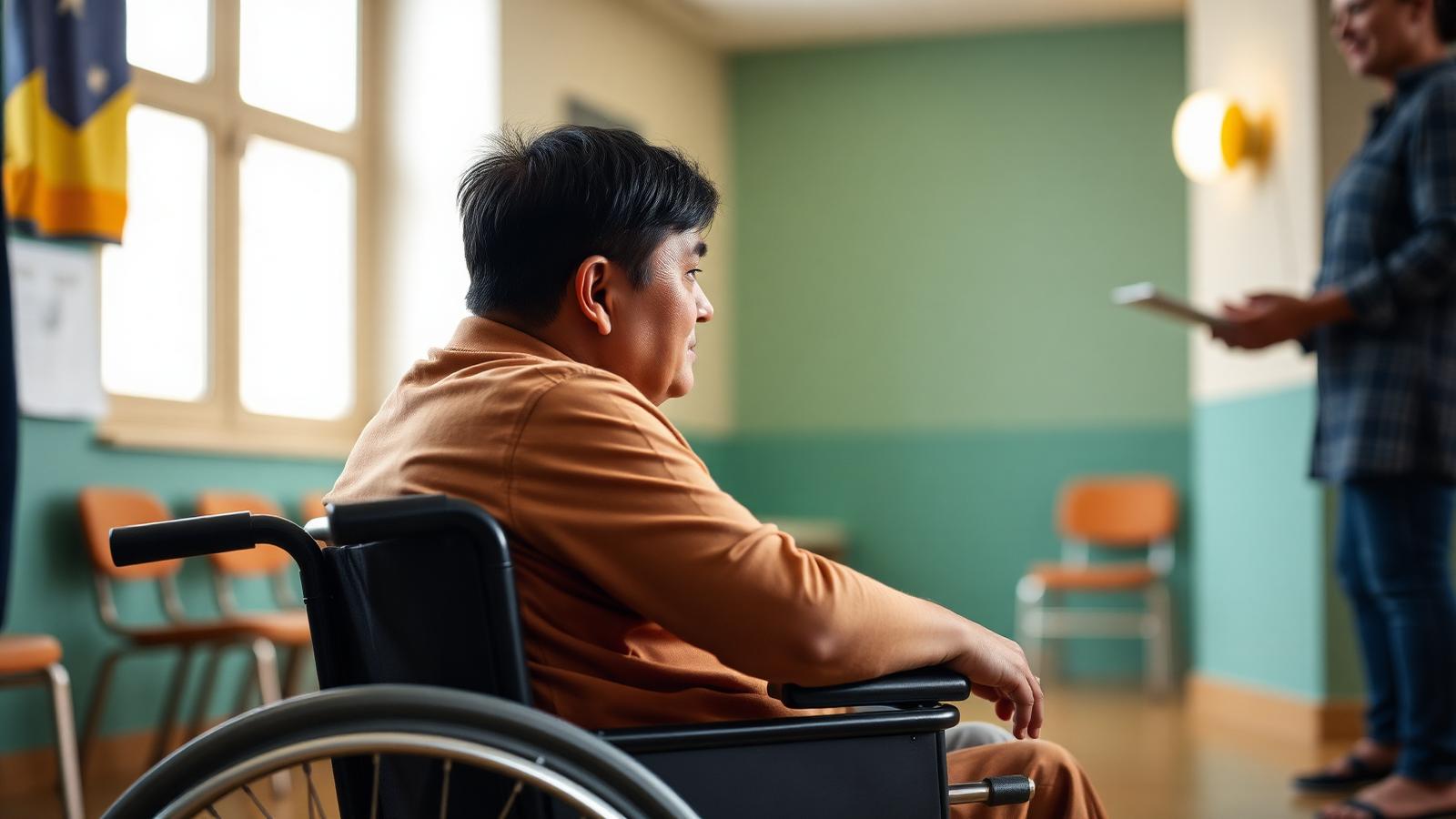
Caregiver abuse
A paid or unpaid caregiver withholds food, medication, mobility aids, or personal care; uses physical force; sexually assaults the person; or controls all communication and decisions.
The ArcIn danger now? Call 911. Confidential 24 hour support: 1-800-799-7233
A form of abuse
Abuse of people with disabilities is any form of physical, sexual, emotional, financial, or neglectful harm directed at someone because of, or made worse by, their disability. It includes caregiver abuse, institutional abuse, and abuse by intimate partners or family members. People with disabilities are assaulted at much higher rates than people without disabilities, and they face unique barriers to reporting and receiving help.
Why this matters
People with disabilities are often taught to be compliant, grateful, and undemanding. They may depend on the very person who is hurting them for food, mobility, medication, communication, or personal care. That dependency is a powerful tool of control, and it makes abuse especially hard to escape.
Barriers to help are real. Services may not be accessible. Staff may not know sign language. A shelter may not accommodate a wheelchair or a service animal. Police may not believe a victim who communicates differently or has a cognitive disability. All of these gaps widen the risk.
Abuse of people with disabilities is not a separate issue from domestic violence. It is domestic violence, and it demands the same commitment to safety, dignity, and justice.
The definition
A paid or unpaid caregiver withholds food, medication, mobility aids, or personal care; uses physical force; sexually assaults the person; or controls all communication and decisions.
The ArcAbuse, neglect, or exploitation in group homes, nursing facilities, hospitals, schools, or day programmes. It can include overmedication, seclusion, physical restraint, and sexual assault.
National Adult Protective Services AssociationPeople with disabilities experience intimate partner violence at high rates. The abuser may also be the caregiver, increasing dependency and danger.
National Resource Center on Domestic ViolenceTaking control of benefits, misusing representative payee status, stealing money, or using the person's disability benefits for the abuser's own expenses.
National Adult Protective Services AssociationHow it works
The abuser controls access to medication, food, bathroom, mobility, and communication. The victim cannot leave without losing essential care.
The ArcThe abuser threatens to send the person to a facility, take away their children, or report them as incapable if they speak up.
National Resource Center on Domestic ViolenceThe abuser intercepts mail, controls phone access, speaks for the person, or prevents use of sign language interpreters or assistive devices.
National Adult Protective Services AssociationThe abuser blames the victim's perception, memory, or mental health condition, telling them that no one will believe them because of their disability.
The ArcHow to identify it
One of these on its own may mean nothing. Several of them together, repeated over time, is a pattern, and a pattern is what abuse looks like from the inside.
Who it happens to
Abuse does not respect age, gender, income, faith, or country. These are the people most often affected by this particular form.
People with physical, intellectual, developmental, sensory, psychiatric, or cognitive disabilities.
Women with disabilities experience disproportionate rates of sexual and intimate partner violence.
Children and older adults with disabilities, who may depend on family or caregivers for all daily needs.
People living in institutions, group homes, or isolated settings where oversight is limited.
What it costs
Injuries, untreated medical conditions, malnutrition, dehydration, and complications from missed medication or neglected care.
World Health Organization, Abuse of older peopleDepression, anxiety, post-traumatic stress, and suicidal ideation. Abuse can also worsen the symptoms of the person's underlying disability or condition.
National Resource Center on Domestic ViolencePeople who are abused by caregivers may lose trust in the systems meant to help them, making it harder to seek support again.
The ArcAbuse can cause or worsen physical and mental health conditions, making independence harder and increasing dependency on the abuser.
National Adult Protective Services AssociationHow to deal with it
If you are in immediate danger, call 911. If you are deaf or hard of hearing, you can text 911 in many areas, or use a relay service.
Contact a domestic violence or disability advocate. The National Domestic Violence Hotline can connect you with accessible services.
Ask for accommodations when you seek help: an interpreter, a wheelchair-accessible shelter, a service animal welcome, materials in plain language, or extra time to communicate.
Keep important documents and contacts somewhere safe if you can. Include medical records, benefit information, and a list of trusted people.
You have the right to be heard and believed. If someone does not listen, ask to speak to someone else, or contact a disability rights organisation.
Speak directly to the person, not only to their caregiver, unless the person asks otherwise. Respect their communication method.
Ask about safety and autonomy in private, away from the suspected abuser.
Provide accessible materials and services. Ensure interpreters, large print, plain language, and physical access are available.
Report suspected abuse to adult protective services or, for children, child protective services. In Texas, call 1-800-252-5400.
Do not assume the person cannot understand or make decisions. Presume competence and support their choices.
Where to get help
If you are in immediate danger, call your local emergency number first. Everything below is confidential and none of it requires you to make a decision today.
dredf.org · resources and advocacy
Advocacy and legal resources for people with disabilities, including information on abuse and safety planning.
thearc.org · resources on abuse
Resources for people with intellectual and developmental disabilities and their families, including safety and abuse prevention.
1-800-799-7233 · text START to 88788
Confidential domestic violence support with connections to accessible local services.
ndrn.org · protection and advocacy
Protection and advocacy agencies in every state for people with disabilities, including help with abuse and neglect.
Questions
Yes. Research consistently shows that people with disabilities experience violence, sexual assault, and abuse at higher rates than people without disabilities. Barriers to reporting and service access mean much of this abuse is hidden.
This is common and dangerous. The victim may depend on the abuser for essential needs. Safety planning must include how to replace care, and adult protective services or disability organisations can help.
When reporting, request accommodations you need: an interpreter, plain language, written communication, or a meeting in an accessible location. If one person refuses, ask for a supervisor or contact a disability rights organisation.
People who do not use speech still communicate. Use their preferred method: sign language, devices, writing, gestures, or a trusted interpreter. Never assume the person has nothing to say.
People with disabilities deserve the same safety, dignity, and justice as anyone else. Abuse against them is not a private family matter; it is violence, and it must be answered with accessible, respectful support.
501(c)(3) tax exempt. Your gift is tax deductible.